
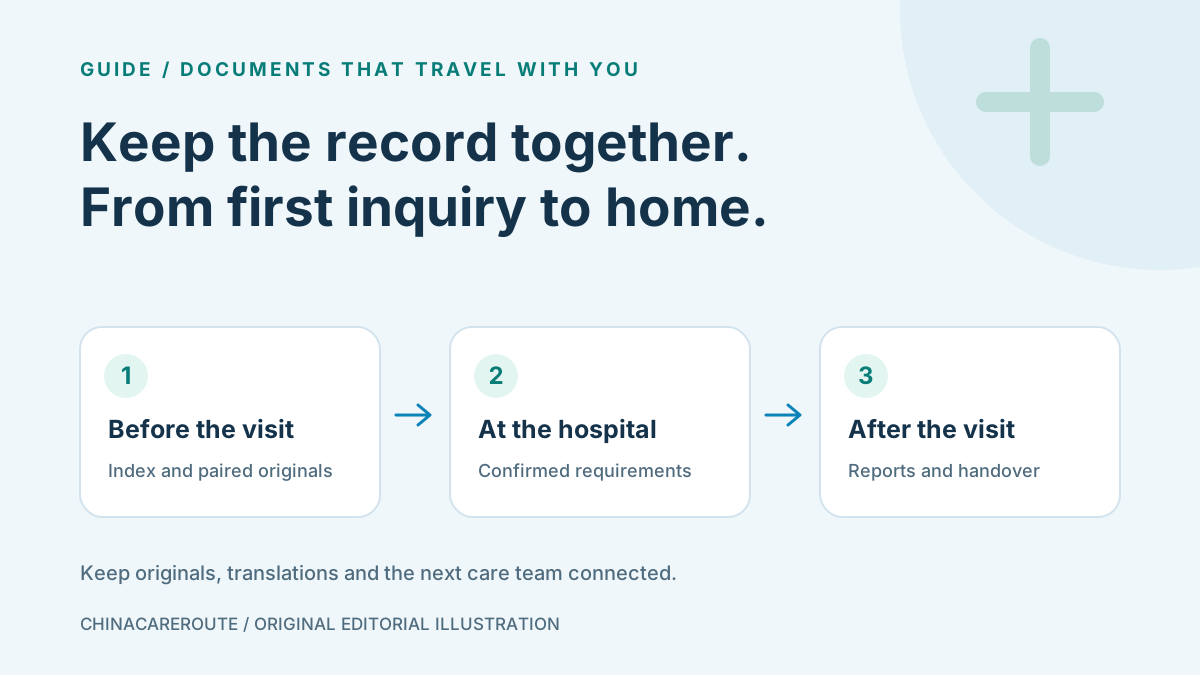
Use the hospital’s request as your starting point
The right document set depends on the reason for the visit. Start by asking the specific hospital department which records it needs for an initial inquiry, a clinical review and an eventual appointment. A general website checklist cannot decide which investigations you need or replace a clinician’s request.
Keep the first administrative message brief: the purpose of the visit, the destination or service you are considering, the languages you use, and a list of records already available. Ask for an approved upload or transfer route before sharing sensitive documents. Our contact form accepts general planning questions and no attachments.
Create an index, not a pile of files
Give every document a clear date and description. Keep a short index that says what the document is, who issued it, its original language and whether a translation accompanies it. Distinguish the report about an image from the imaging file itself; ask the receiving service what formats it accepts.
| Document group | What to organize | What to confirm |
|---|---|---|
| Clinical summary | Dated referral or consultation letters already held | Whether the receiving specialist needs a particular format |
| Results and images | Original reports, dates, units and available files | Which items are needed and how to transfer them |
| Translations | Translation paired with its original and version | Required language and whether a certified version is requested |
| Administrative records | Appointment confirmation and current cost explanation | Exact campus, department, payment and cancellation arrangements |
| Return handover | Written findings, discharge information and agreed follow-up | Who receives the documents and answers later questions |
Keep translations traceable
Do not replace the source report with an edited English summary. Preserve names, dates, measurement units and document identifiers in the paired set. Mark a personal summary as a summary and tell the service if it was machine translated. Ask how ambiguities will be checked during the clinical consultation. Translation assistance and clinical interpretation are different responsibilities.
A simple file naming convention can help: date, document type and issuing service, without unnecessary personal details in a public link. Use a private transfer route specified by the provider. Confirm who can access shared documents and how you can correct a wrong file.
Plan the return handover before you leave
The CDC Yellow Book highlights continuity of care and obtaining overseas medical records for subsequent follow-up. Ask in advance which written records the hospital provides, whether an English version is available, how long it takes and how to obtain later corrections.
Record the contact for obtaining reports separately from a booking or marketing contact. If ongoing care at home is needed, agree how that team will receive the documents and which questions need an answer from the treating service in China.
Use a final administrative check
- The appointment names the correct person, campus, department and visit purpose.
- The hospital has confirmed which records it expects, and missing items are identified.
- The language arrangement and the way to receive written findings are recorded.
- The estimate distinguishes confirmed charges from services still to be assessed.
- There is a documented route for follow-up, additional reports and questions after returning home.
These steps organize information; they do not determine clinical eligibility, travel clearance or coverage. See the hospital directory for recorded official contacts and use the needs form for a general navigation question.
Sources & review
Sources apply to the specific facts and service channels described. Availability can change; check the official information before making plans.
-
Medical tourism: CDC Yellow Book 2026
Care abroad involves travel-related and continuity-of-care issues as well as the procedure itself; record transfer, follow-up and coverage need planning.
Scope: General cross-border care considerations, not China-specific hospital performance or individual fitness to travel.