
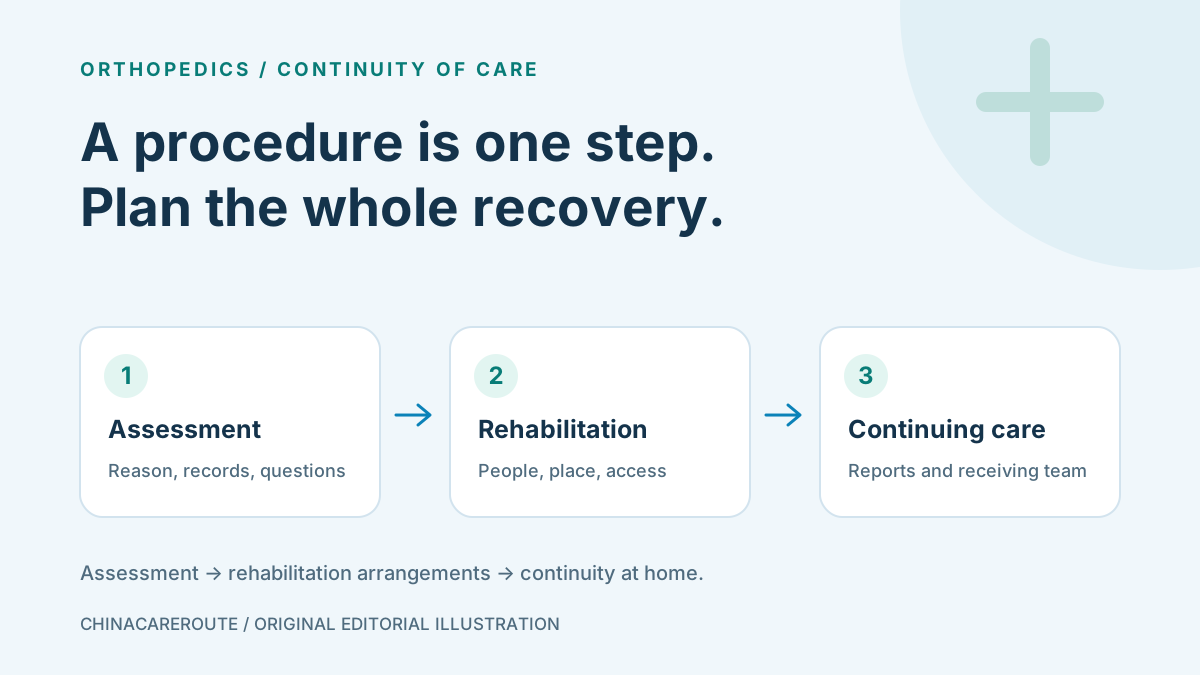
Understand the reason for an assessment
Knee replacement can be considered for substantial pain and movement limitations when other approaches have not been sufficient. The NHS explanation identifies osteoarthritis as a common reason. That background does not establish your diagnosis, whether replacement is appropriate, or which operation should be considered. Those decisions require assessment of your individual circumstances.
When contacting an overseas orthopedic service, describe what you want reviewed: a new diagnosis, an existing recommendation, a second opinion or a plan already discussed with a treating clinician. Give the date of your latest assessment and identify the information you can provide.
Organize records before comparing packages
Ask whether the receiving service wants existing imaging, imaging reports, previous operation notes, a current medication list or a referral letter. Keep the actual files with dates and match them to a brief document index. Ask which formats can be reviewed remotely and whether a translation is required. Do not assume that a report summary substitutes for the imaging files a specialist requests.
Request an itemized explanation of what the proposed appointment or package covers. Useful categories to clarify include the initial specialist assessment, investigations, hospital stay, any proposed procedure, rehabilitation, equipment, outpatient follow-up and help if the plan changes. Availability and costs need a current response from the specific provider.
Make rehabilitation visible in the conversation
The NHS recovery information describes recovery as a process that can take months or longer and varies between individuals. A short hospital stay and a return to ordinary daily activities are different milestones. Ask your own team how it expects assessment, rehabilitation and review to fit together; this article does not supply an exercise program or recovery deadline.
- Who coordinates rehabilitation, and where will sessions take place?
- How is the discharge destination assessed, including steps, lifts, bathroom access and available assistance?
- Which written instructions and contact routes are provided if the recovery plan changes?
- Who reviews progress after departure from China, and which records will that clinician receive?
- How will unexpected additional care or a longer stay be arranged and paid for?
Ask about transport as part of the care plan
Discuss the proposed itinerary with the treating professionals, including airport access, transfers, help with luggage and the timing of a flight. The CDC’s cross-border care guidance explains that surgery and travel can create additional risks. A travel booking or a hospital discharge document should not be treated as an individual fitness-to-fly decision.
A practical accommodation inquiry should ask about room access, lifts and assistance rather than rely on a generic “near the hospital” label. Keep companion services, rehabilitation and clinical nursing clearly described so that you know who is responsible for each part.
Leave with a usable handover
Before a confirmed treatment journey, ask what discharge summary, procedure details, test results and follow-up plan will be provided, in which language, and when. Arrange a receiving clinician at home where needed. Our medical-records checklist can help structure the administrative handover.
Sources & review
Sources apply to the specific facts and service channels described. Availability can change; check the official information before making plans.
-
Why a knee replacement is done
Knee replacement may be considered for significant pain and movement problems; osteoarthritis is a common reason.
Scope: General background, not individual surgical eligibility.
-
Recovering from a knee replacement
Recovery can take months or longer and varies with individual circumstances; hospital and home recovery require coordinated care.
Scope: General recovery context. No personalized exercise or timeline instructions are reproduced.
-
Medical tourism: CDC Yellow Book 2026
Care abroad involves travel-related and continuity-of-care issues as well as the procedure itself; record transfer, follow-up and coverage need planning.
Scope: General cross-border care considerations, not China-specific hospital performance or individual fitness to travel.